 Save
Save Cottage cheese flatbread wasn’t the kind of thing I ever imagined baking until a slow afternoon in early spring changed my mind. The sunlight was falling across the kitchen just so, and I was craving something light but comforting—something I could pull together while answering a few texts and sipping cold coffee. I stumbled across the idea of making a high-protein flatbread with cottage cheese and just happened to have a container begging to be used up. Soon, the sound of the mixer blending creamy curds with eggs and flour filled the air, and I noticed my curiosity turn quickly into anticipation. There’s something quietly thrilling about realizing a humble ingredient can become the star of a meal.
Last summer, I made this for brunch with a friend who never thought she liked cottage cheese. The look on her face as she took that first bite—utter disbelief—still makes me laugh, especially since she asked for the recipe before the plates were cleared. Food has a sneaky way of catching us off guard like that. Just a few vibrant toppings, an unfussy process, and suddenly, you’ve got a dish that brightens the table and the mood. I’ve since made it with family, chatting over coffee as the flatbread crisps up in the oven, the kitchen filling with hints of garlic and basil.
Ingredients
- Cottage cheese: This is the base; blending makes it smooth, so even skeptics are won over—choose full fat for extra richness.
- Eggs: They help the flatbread set and add structure; room temperature eggs mix best, I’ve found.
- All-purpose flour (or gluten-free): Flour binds everything; using chickpea flour works for gluten-free friends, but changes the flavor slightly.
- Salt: Don’t skip it—it enhances all the savory notes.
- Garlic powder: Just a little gives aromatic warmth without overpowering.
- Baking powder: Lifts the flatbread for a softer, lighter bite.
- Prepared basil pesto: Store-bought works, but homemade makes this next-level—either way, brush on as soon as the bread cools slightly.
- Cherry tomatoes: Halving them lets them nestle into the pesto and keeps them juicy when baked.
- Fresh basil leaves: Scattering leaves just before serving fills the air with summery fragrance.
- Black pepper: Freshly ground makes a real difference in flavor complexity.
- Grated parmesan (optional): Adds a salty, savory finish—sometimes I skip it, sometimes I pile it on.
Tired of Takeout? 🥡
Get 10 meals you can make faster than delivery arrives. Seriously.
One email. No spam. Unsubscribe anytime.
Instructions
- Get prepped:
- Preheat your oven to 400°F (200°C) and line a sturdy baking tray with parchment paper so the flatbread lifts off easily.
- Mix up the batter:
- Grab a medium bowl and blend together cottage cheese, eggs, flour, salt, garlic powder, and baking powder using a food processor or hand blender until silky smooth and pale.
- Shape the flatbreads:
- Divide the creamy batter in half, spreading each portion into a thin oval, about 1/4-inch thick, on your tray—it will look loose, but trust the process.
- Bake to perfection:
- Slide into the oven and bake for 18 to 20 minutes, until the edges turn golden and the middle feels set when pressed gently.
- Cool and top:
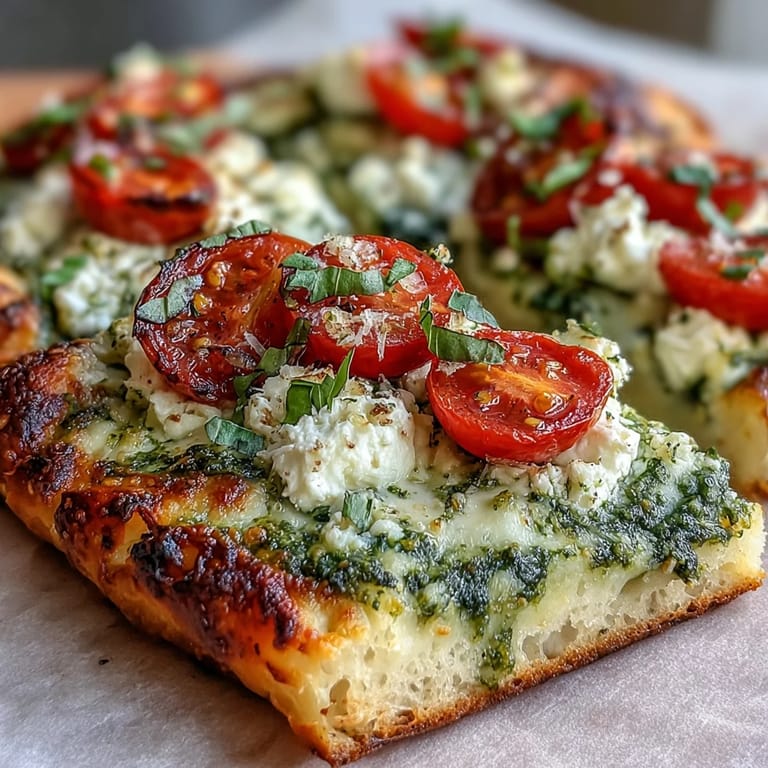
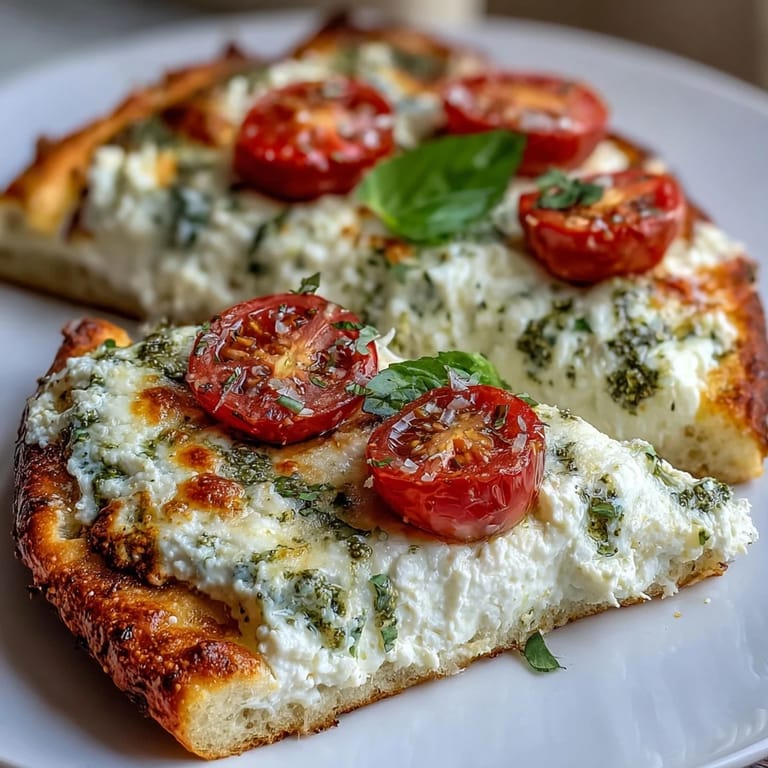
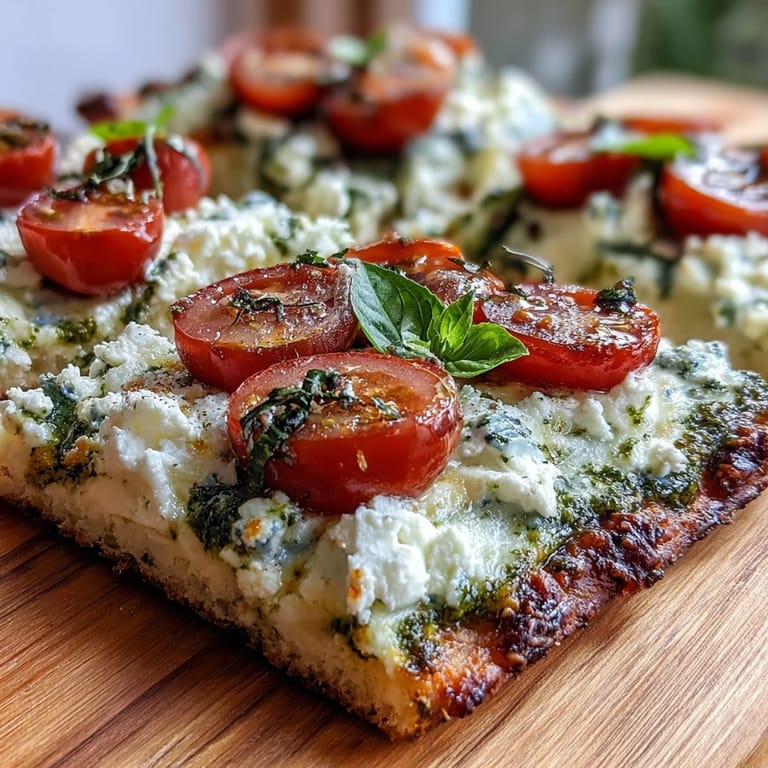
- Let the flatbreads cool just until they can be handled, then slather each with pesto and dot with juicy tomato halves. A sprinkle of black pepper and parmesan now is seriously encouraged.
- Finish and serve:
- Add fresh basil leaves, slice into pieces, and serve while still warm and fragrant.
 Save
Save 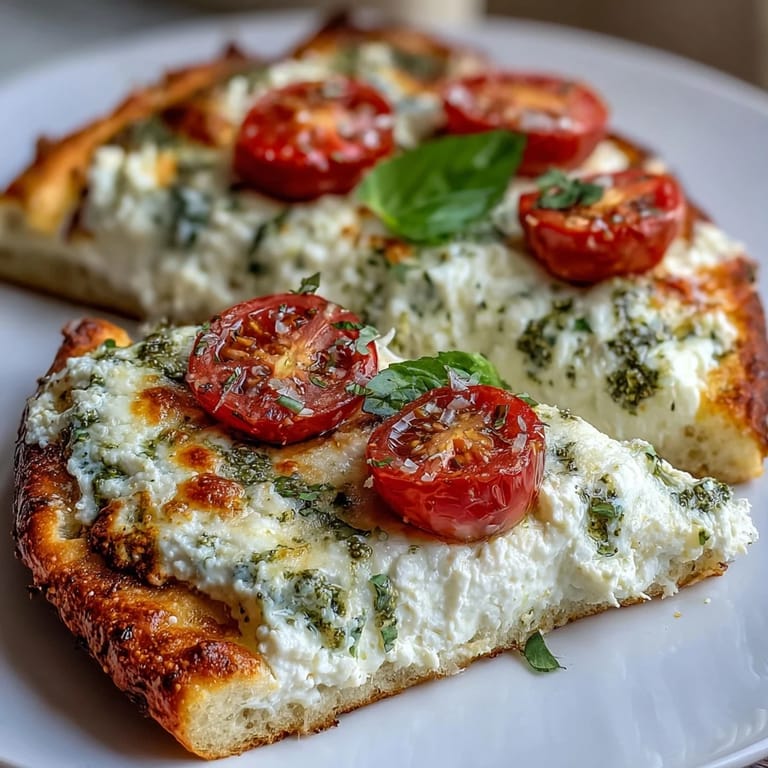 Save
Save The day my niece declared this flatbread her new favorite lunch, we ended up sitting on the kitchen floor, laughing and eating with our fingers. It wasn’t about the recipe for a moment—it was about the fun of making and sharing something unexpected and new together. Sometimes connecting over a big platter of colorful food is the memory that lingers longest. The flatbread itself merely plays supporting role to the conversations and small joys that fill the house. And now, every time I whisk cottage cheese into a bowl, I remember that simple afternoon.
Choosing the Right Cottage Cheese
I've noticed that not all cottage cheese blends the same—some brands are much creamier, while others are quite lumpy and need extra work. If you want a smooth, almost fluffy base, go for one that’s labeled 'creamy' or 'small curd.' Blending longer helps, too. It’s worth a taste test to find your favorite. Texture can make or break the final flatbread.
Jazzing Up the Toppings
Cherry tomatoes and pesto are just the beginning—sometimes I add thin slices of roasted red pepper or a pinch of chili flakes for heat. Sun-dried tomatoes add an extra punch, or try arugula tossed in lemon for a peppery bite. My fridge is rarely without a jar of olives, which also make a briny, salty topping. Swapping the toppings is the easiest way to keep this meal feeling new. Invite a friend to bring their favorite, and you might discover something wonderful together.
How to Serve and Store Leftovers
This flatbread is just as good cut into wedges for a party platter as it is piled onto a lunch plate. If you have leftovers, let them cool completely and stash in an airtight container—they’ll hold up for a day or so in the fridge. Reheat on a hot pan to crisp the edges back up before serving.
- The flatbread base also makes a great crust for breakfast eggs.
- You can freeze it (without toppings), then thaw and re-toast to refresh.
- Don’t stack them while hot—steam makes them soggy.
 Save
Save  Save
Save This flatbread is one of those easy wins that makes you feel like a kitchen genius. Try it with friends and see how something simple can bring a little spark to the table.
Recipe FAQs
- → How do I get a smooth, lump-free batter?
Use a food processor or hand blender to fully break down the cottage cheese before adding eggs and flour. Pulse until the mixture is homogenous; scrape the bowl once to ensure even texture.
- → What flour works for a gluten-free version?
Chickpea flour or a 1:1 gluten-free all-purpose blend works well. Chickpea flour adds extra structure and protein; you may need to adjust hydration slightly if the batter seems too thick.
- → How can I prevent a soggy base after adding toppings?
Bake the flatbreads until fully set and edges are golden, then let them cool briefly before adding pesto and tomatoes. Using slightly drier toppings (halved rather than whole cherry tomatoes) and blotting excess moisture helps maintain crispness.
- → Can I make these ahead and reheat later?
Yes. Store cooled flatbreads in an airtight container in the fridge for up to 2 days. Reheat in a hot oven or toaster oven for a few minutes to revive the edges before adding fresh pesto and tomatoes.
- → Any tips for adapting flavor or heat?
Mix a pinch of chili flakes into the batter or sprinkle them on top for heat. Swap fresh tomatoes for sun-dried tomatoes for concentrated sweetness, or stir minced garlic into the pesto for extra punch.
- → What yields and nutrition can I expect per serving?
This makes two flatbreads (one serving = one flatbread). Per serving: about 270 calories, 15 g fat, 18 g carbs and 18 g protein, depending on toppings and exact ingredients.