 Save
Save One Tuesday evening, I was standing at my kitchen counter feeling that familiar frustration—hungry but stuck in that low-carb limbo where nothing seemed appealing. My roommate walked past with takeout containers, and I thought, there has to be something faster and fresher than that. That's when I pulled out a package of shirataki noodles I'd been curious about and decided to build a bowl around them. Twenty-five minutes later, I was holding something vibrant and satisfying that didn't taste like deprivation at all.
I made this for my friend Sarah, who'd just started exploring low-carb eating and was genuinely sad about giving up noodles. Watching her taste this for the first time—the way her eyes lit up when she realized the noodles had actual texture and weren't rubbery—made me understand why this dish became my go-to recommendation. She's made it at least a dozen times since, and she texts me photos. That kind of thing matters.
Ingredients
- Shirataki noodles (400 g): These deserve respect—rinse them thoroughly and boil them briefly to remove any funky smell and improve their texture, which honestly makes all the difference between chewy-good and weird-rubber.
- Bok choy (1 cup, sliced): It wilts quickly and stays tender-crisp if you add it toward the end, plus it absorbs the sauce beautifully.
- Red bell pepper (1/2, thinly sliced): The sweetness balances the ginger heat, and thin slicing means it cooks through without losing its snap.
- Snow peas (1/2 cup, trimmed): Leave them whole or halve them depending on your mood; they stay crunchy and add a delicate sweetness.
- Carrot (1 medium, julienned): Julienne cuts mean they cook evenly and feel elegant, plus they catch the sauce in all those little nooks.
- Green onions (2, thinly sliced): Add half before cooking and scatter the rest on top for brightness and a subtle onion bite.
- Tamari or gluten-free soy sauce (2 tbsp): Tamari is your friend if you're avoiding gluten—it's salty, complex, and makes the sauce feel restaurant-quality.
- Rice vinegar (1 tbsp): This adds a gentle tang that keeps the sauce from feeling one-dimensional.
- Toasted sesame oil (1 tbsp): Use the good stuff here; it's worth it and a little goes a long way.
- Fresh ginger (1 tbsp, finely grated): Grate it right before cooking so you capture all that warm, peppery aroma—it's the soul of this bowl.
- Garlic (1 clove, minced): One clove is subtle enough not to overpower but present enough to matter.
- Maple syrup (1 tsp, optional): A whisper of sweetness rounds out the ginger and tamari without making things cloying.
- Chili flakes (1/2 tsp, optional): Add more if you like heat, or skip it entirely if you prefer smooth and soothing.
- Toasted sesame seeds (1 tbsp) and fresh herbs: These are your final flourish—they turn a simple bowl into something that looks like you planned it.
Tired of Takeout? 🥡
Get 10 meals you can make faster than delivery arrives. Seriously.
One email. No spam. Unsubscribe anytime.
Instructions
- Handle the noodles with intention:
- Drain your shirataki noodles, rinse them under cold water, and boil them for two minutes—this step removes that slightly funky smell and makes them infinitely more pleasant to eat. After draining, pat them completely dry with paper towels so they don't steam themselves into mushiness.
- Build your flavor base:
- In a small bowl, whisk together the tamari, rice vinegar, sesame oil, freshly grated ginger, minced garlic, maple syrup if using, and chili flakes. Taste it—you're looking for that balance of salty, tangy, warm, and a touch sweet, with just enough heat to make you feel alive.
- Get your pan hot and moving:
- Heat your skillet or wok over medium-high heat until it's genuinely hot; you'll know when you feel the heat radiating outward. Add the carrot, bell pepper, and snow peas and keep stirring for two to three minutes, letting them soften just slightly while staying crisp.
- Bring the bok choy and green onions into the mix:
- Add your bok choy and most of the green onions and keep stirring for another minute or so, just until the bok choy starts to wilt at the edges but still holds its shape.
- Unite everything with the noodles and sauce:
- Add your drained shirataki noodles to the pan, pour the ginger sauce over everything, and toss it all together like you mean it. Cook for two to three minutes, stirring constantly, until the noodles are heated through and the whole bowl is glistening with sauce.
- Finish with intention:
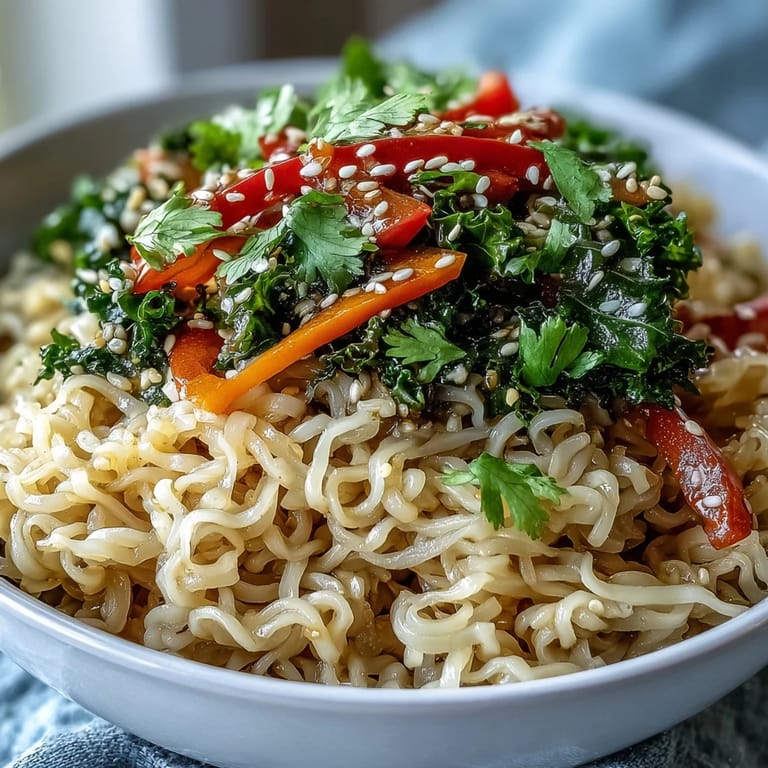
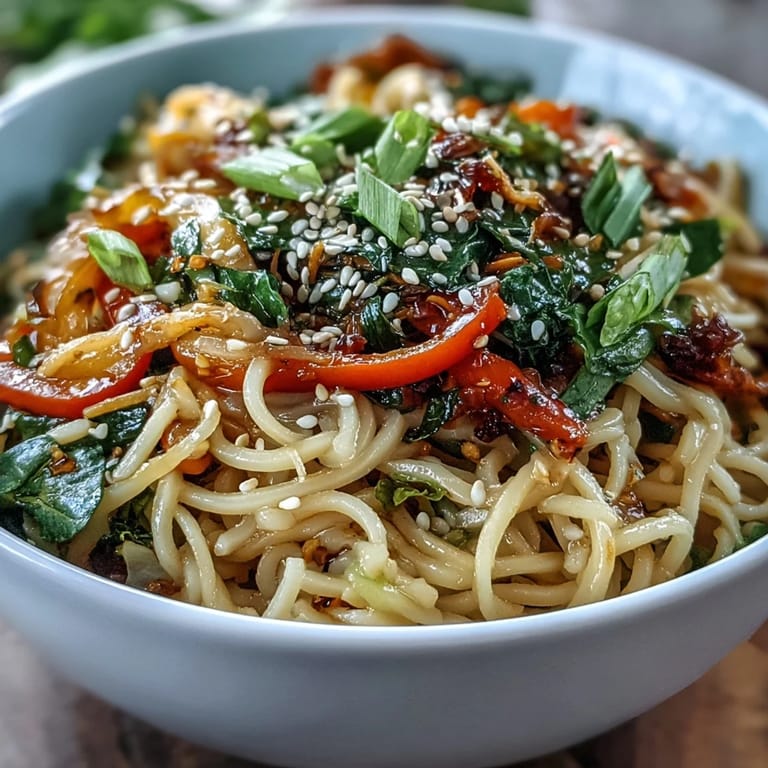
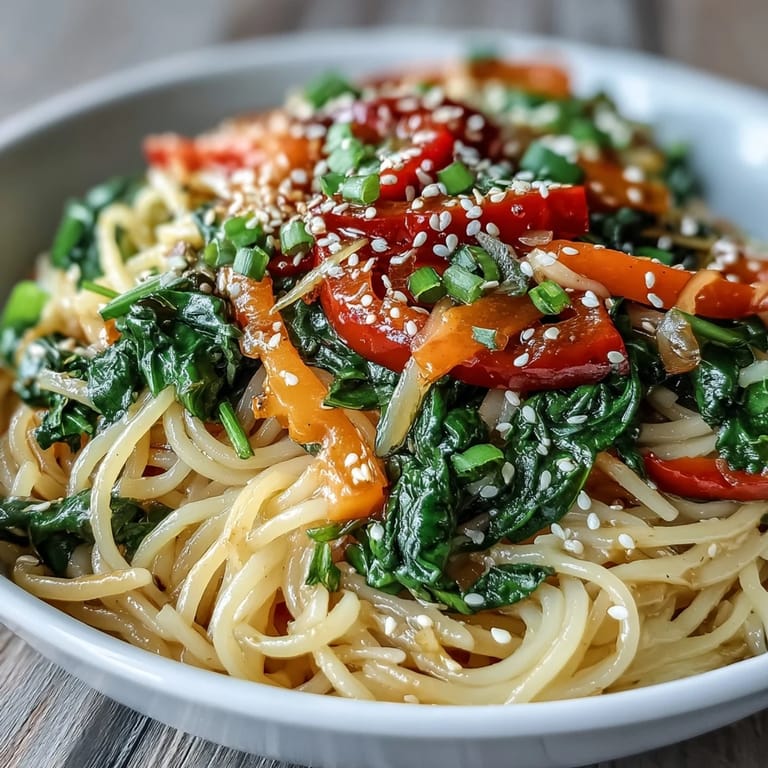
- Divide between bowls and scatter toasted sesame seeds and the remaining green onions over top, along with fresh cilantro or basil if you have it. Serve immediately while everything is still warm and the vegetables still have their snap.
 Save
Save There's something about a bowl that feels both nourishing and indulgent at the same time, and this one does exactly that. It's become my Thursday night ritual—standing at the stove listening to the vegetables sizzle, that ginger scent rising up like a little gift to myself.
The Story Behind Shirataki Noodles
Shirataki noodles used to feel intimidating to me, honestly—I'd seen them in specialty sections and assumed they'd be complicated or taste strange. Then I learned they're just konjac root and water, and suddenly they felt less like a health hack and more like an ingredient with its own quiet dignity. Once I understood that the rinsing and brief boil weren't optional steps but essential techniques, everything clicked. Now I keep a few packages on hand like they're as normal as regular pasta, because for what this bowl delivers, they absolutely are.
Customizing Your Bowl
The beauty of this recipe is that it's a framework, not a prescription. I've made versions with broccoli when I forgot to buy bok choy, with mushrooms when I wanted something earthier, with snap peas when I wanted more sweetness. The sauce stays constant and transforms whatever vegetables you use, making this feel like the kind of meal you can throw together from whatever's in your kitchen without second-guessing yourself.
Flavor Layers and How They Work
What makes this sauce sing is the interplay between warm, cool, bright, and rich—ginger brings warmth and a slight pepper note, rice vinegar adds brightness and cuts through the oil, sesame oil brings nutty depth, and tamari grounds everything with umami. It's like a small conversation happening in your mouth, where no single flavor drowns out the others. When you taste it before adding the noodles and vegetables, you might think it's intense, but once everything comes together, it balances perfectly and coats everything with clarity.
- Start tasting your sauce before you finish cooking and adjust—if it feels too salty, add a splash of water; if it needs more zip, add rice vinegar drop by drop.
- Fresh ginger truly matters here, so if you only have powdered, use it sparingly because it behaves very differently.
- Make extra sauce and keep it in a jar for drizzling over salads or rice bowls later in the week.
 Save
Save This bowl has become my answer to almost everything—busy Tuesday, exploring new ingredients, wanting something that feels special but tastes effortless. Make it tonight, and I promise you'll be thinking about it again next week.
Recipe FAQs
- → What do shirataki noodles taste like?
Shirataki noodles have a very mild, neutral taste that easily absorbs flavors from sauces and seasonings. Their texture is slightly gelatinous but becomes more pleasant when rinsed well and cooked with other ingredients.
- → How do I prepare shirataki noodles properly?
Drain the noodles, rinse thoroughly under cold water, then boil for 2 minutes. Drain well and pat dry with paper towels to remove excess moisture before adding to your stir-fry.
- → Can I make this dish ahead of time?
This bowl tastes best when served fresh, but you can prepare the vegetables and sauce in advance. Store them separately in the refrigerator and quickly stir-fry everything when ready to eat.
- → What vegetables can I substitute?
Broccoli florets, sliced mushrooms, snap peas, or shredded cabbage work beautifully in this dish. Feel free to use whatever crisp vegetables you have on hand.
- → Is this dish suitable for meal prep?
Yes, though the vegetables will lose some crispness. Store components separately and reheat gently, or enjoy it cold—though it's most delicious when freshly prepared.
- → How can I add more protein?
Top with grilled tofu, crispy tempeh, edamame, or cooked shrimp. These proteins complement the Asian flavors beautifully while keeping the dish satisfying.