 Save
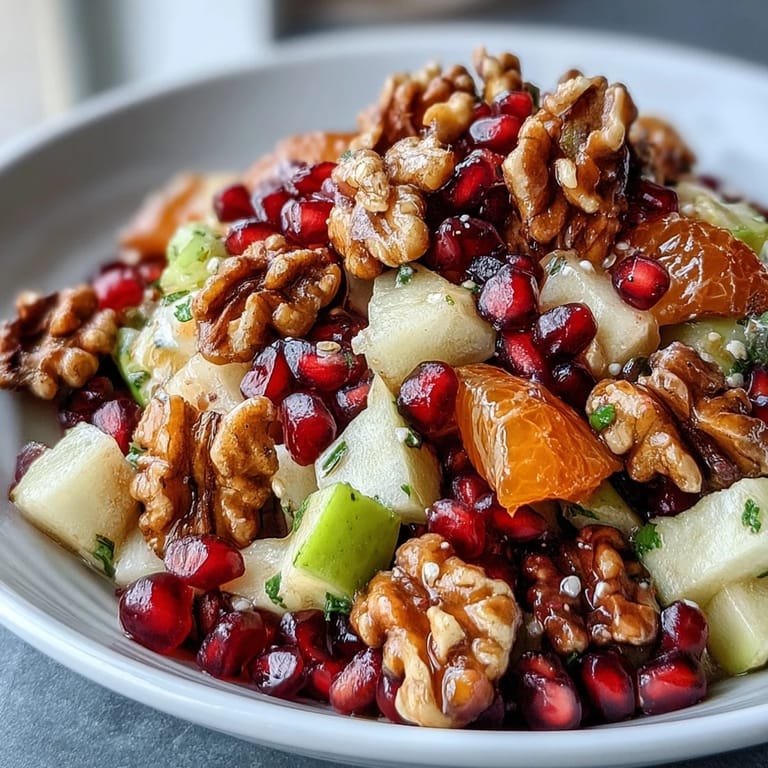
Save My neighbor knocked on my door one December afternoon with a pomegranate in hand, insisting I try her winter salad before the holiday rush swallowed us whole. I was skeptical—fruit salads felt summery, nostalgic, belonging to picnics and June afternoons. But the moment those ruby seeds hit my tongue alongside the crisp snap of walnuts, something shifted. It tasted like jewels and sunlight in the middle of gray days, and I understood why she'd made the trip.
Last year I brought this salad to a potluck at my friend's house, and three different people asked for the recipe before dessert was even served. I remember thinking how unusual that was—salads rarely inspire that kind of urgency. One woman mentioned she'd been reaching for the same heavy winter meals for months and had forgotten that food could feel this bright and alive on a cold day.
Ingredients
- Pomegranate seeds: These little rubies hold the entire personality of the salad—juice-filled and slightly tart, they're worth the effort of extracting rather than buying pre-separated.
- Orange segments: The citrus adds sweetness and prevents the salad from tasting too austere; freshly peeled ones taste nothing like the pre-packaged versions.
- Apple and pear: Dice them just before serving so they keep their crisp texture and don't oxidize into a sad brown color.
- Walnuts: Buy them raw and chop them yourself—they taste exponentially better than pre-chopped, and the act of breaking them up feels meditative.
- Pumpkin and sunflower seeds: These are your crunch insurance, holding texture even as the fruit starts to release its juice.
- Extra-virgin olive oil: Don't skimp here; a good oil makes the dressing taste intentional rather than obligatory.
- Lemon juice, honey, and cinnamon: Together they create a dressing that's tart, sweet, and warmly spiced—like the salad is whispering instead of shouting.
- Fresh mint: Optional but not really; it lifts everything and reminds you that winter gardens still have life in them.
Tired of Takeout? 🥡
Get 10 meals you can make faster than delivery arrives. Seriously.
One email. No spam. Unsubscribe anytime.
Instructions
- Gather your fruits like you're collecting colored glass:
- Halve that pomegranate over a bowl so you catch every drop of juice, then segment your orange and dice the apple and pear. The textures should vary—some pieces chunky, some neat, which is what makes it interesting to eat.
- Bring in the crunch:
- Scatter your walnuts, pumpkin seeds, and sunflower seeds across the bowl. If you have time, toast them for a few minutes in a dry pan and let them cool first—the flavor becomes deeper and more intentional.
- Compose the dressing in a small bowl:
- Whisk the olive oil with lemon juice, honey, and cinnamon until it looks emulsified and honey-colored. Taste it and adjust if it needs more tartness or sweetness; trust your instinct here.
- Dress and toss gently:
- Pour the dressing over everything and toss with care, as if you're folding clouds. You want every piece coated but the fruit still intact, not bruised.
- Finish and serve:
- Top with mint if you're using it, and serve right away or chill for up to two hours if you need to let flavors deepen and mingle.
 Save
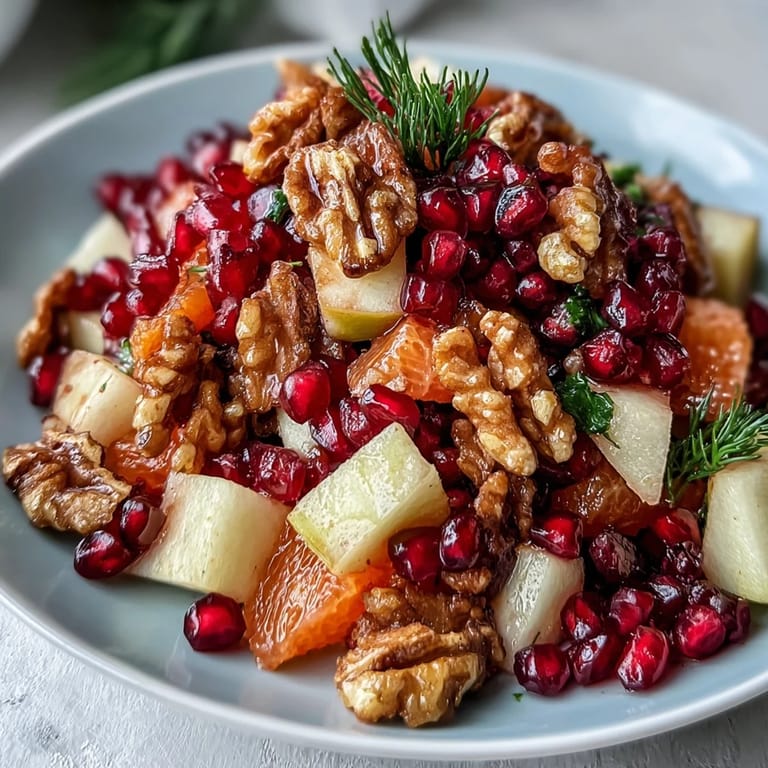
Save My son came home from school one afternoon and ate half of this salad standing at the kitchen counter without being asked, which is the highest compliment a parent can receive. He said it tasted like something good was happening, and I realized that's exactly what this salad is—a small, edible moment of intentionality in the middle of regular life.
The Best Time to Make This
December through February is when pomegranates are at their peak, their skin taut and their seeds bursting with juice. But honestly, this salad works whenever you need a meal that feels nourishing without being heavy. Winter is its true season though, when the palette of available produce has narrowed and you need something to remind you that color still exists.
Variations That Feel Natural
Swap the pear for persimmon if you want something sweeter and more delicate, or use kiwi if you're feeling like something tropical should crash the winter party. Hazelnuts work beautifully in place of walnuts if that's what you have, and the dressing works with any citrus you can find—pomelo, grapefruit, even lime if you're feeling bold.
Making It Your Own
The magic of this salad is that it's flexible enough to work with what you have on hand but structured enough that it never feels like you're just throwing things together. I've added crumbled feta, torn pieces of radicchio, and even a few segments of blood orange on days when I had them lingering in the crisper drawer.
- Toast your nuts and seeds for an extra layer of depth that makes the whole thing feel more intentional.
- Make the dressing first and let it sit while you prep everything else—the flavors will marry and taste less sharp.
- If you're serving this to people who don't usually eat salads, the pomegranate seeds are your secret weapon; they convert skeptics immediately.
 Save
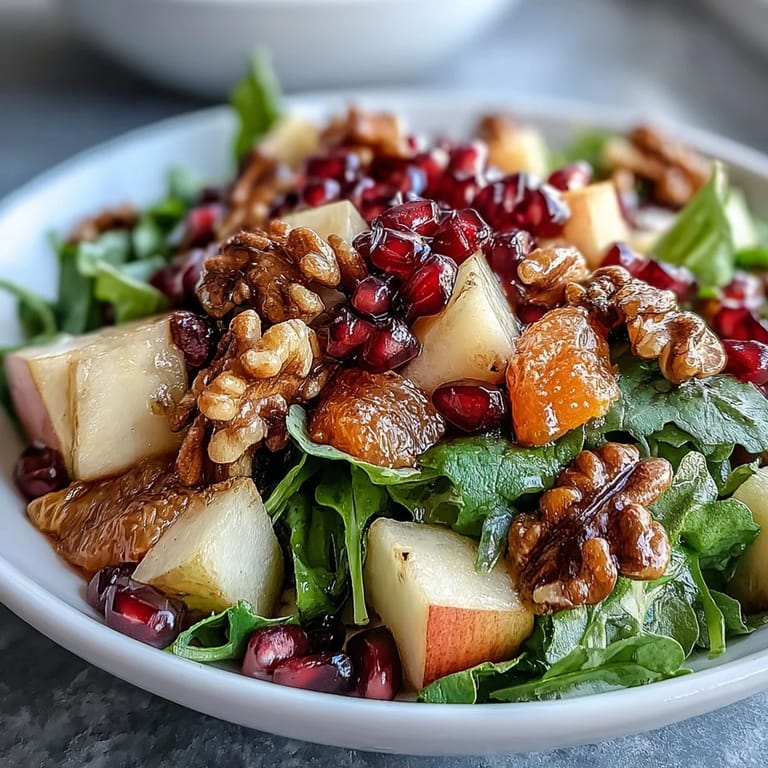
Save This salad has become my winter answer to the question of what to bring somewhere when I want to show up with something thoughtful. It's a reminder that the best meals are often the simplest ones, built from good ingredients treated with care.
Recipe FAQs
- → How long does this pomegranate walnut salad stay fresh?
This salad tastes best when served immediately, but you can refrigerate it for up to 2 hours before serving. The dressing will start to soften the nuts and seeds if stored longer, so add them just before serving if preparing ahead.
- → Can I substitute the fruits in this winter salad?
Absolutely! Try replacing pears with persimmons or swapping apples for kiwi. The base combination of pomegranate and walnuts works well with various winter fruits like clementines, grapefruit segments, or even sliced persimmons.
- → What makes this pomegranate salad anti-inflammatory?
Pomegranates contain powerful antioxidants called punicalagins, while walnuts provide omega-3 fatty acids. Combined with cinnamon's anti-inflammatory properties and vitamin C from citrus fruits, this bowl delivers a natural boost to your body's defense system.
- → Should I toast the walnuts and seeds before adding?
Lightly toasting the walnuts and pumpkin or sunflower seeds enhances their nutty flavor and adds extra crunch. Simply toast them in a dry pan over medium heat for 2-3 minutes until fragrant, then let cool before tossing with the fruits.
- → What drinks pair well with this fruit and nut salad?
A dry Riesling complements the sweet and tart notes beautifully, while sparkling water with a citrus wedge offers a non-alcoholic option. The salad also pairs nicely with light white wines like Pinot Grigio or Sauvignon Blanc.