 Save
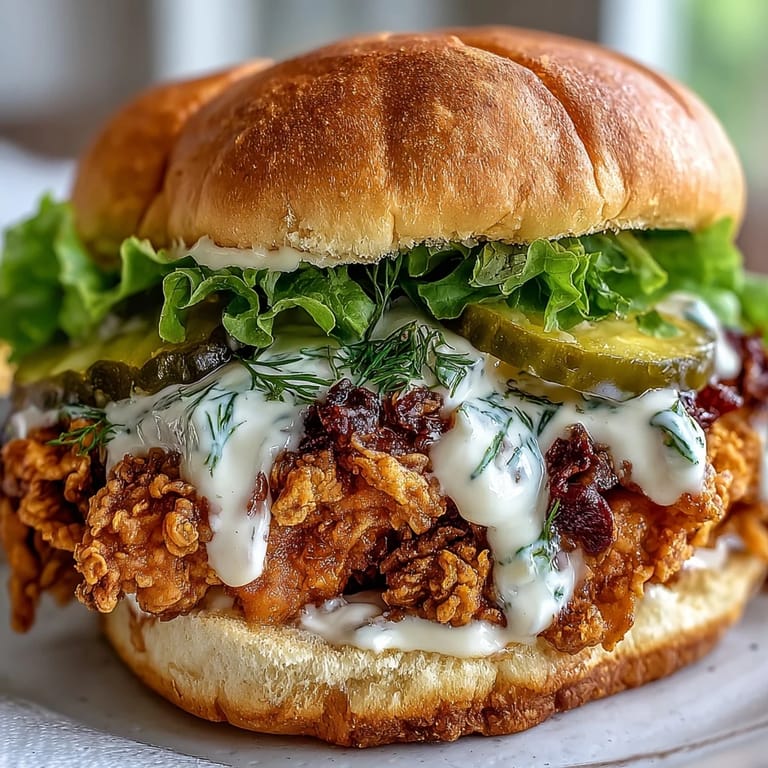
Save The smell hit me first, sharp and alive, before I even cracked the jar of pickles. My kitchen was already humid from the oil heating on the stove, and I had flour under my nails from pressing the dredge into each chicken breast like I was sealing an envelope. I wasn't trying to replicate anything famous. I just wanted something that tasted like effort and tasted like now, something that would make my partner look up from his laptop and actually sit down at the table. That first batch came out darker than I planned, crackling loud when I bit in, and I realized I'd been chasing this exact texture without knowing it.
I made these sandwiches the night before a long road trip, thinking we'd reheat them in a motel microwave. We didn't make it that far. We pulled over an hour in, unfolded the foil on the dashboard, and ate them cold in a parking lot while the sun set over a gas station. The sauce had soaked into the bun just enough, the pickles still had snap, and my partner said it tasted better than anything we'd paid fifteen dollars for. I kept that wrapper in the glove box for weeks, a little greasy proof that sometimes you don't need a destination to have a moment worth keeping.
Ingredients
- Boneless, skinless chicken breasts: Pound them thin so they cook evenly and fast, and the edges get extra crispy without drying out the center.
- Buttermilk: The acid breaks down the protein, making the chicken impossibly tender, and it helps the dredge cling like a second skin.
- Hot sauce: This isn't just for heat, it adds a vinegar tang that wakes up the whole marinade and keeps it from tasting flat.
- Cornstarch: Mixed into the flour, it creates an ultra-light, shattery crust that fries up pale gold and holds its crunch longer than flour alone.
- Smoked paprika: A small amount in the sauce gives it a campfire warmth that makes the whole sandwich taste more layered and interesting.
- Brioche buns: Buttery and soft, they soak up the sauce without falling apart and add a slight sweetness that plays off the spice.
- Dill pickles: The brine cuts through the richness and gives you something sharp and clean between bites of fried chicken.
- Vegetable oil: It has a high smoke point and neutral flavor, so the chicken tastes like chicken and spice, not the oil itself.
Tired of Takeout? 🥡
Get 10 meals you can make faster than delivery arrives. Seriously.
One email. No spam. Unsubscribe anytime.
Instructions
- Marinate the chicken:
- Whisk the buttermilk with hot sauce and all the spices until it smells like something you'd want to dip bread into. Submerge the chicken completely, cover it, and let it sit in the fridge for at least an hour, though overnight makes it even better.
- Prepare the dredge:
- In a wide, shallow dish, whisk together the flour, cornstarch, and spices until evenly blended. This mix should feel light and smell toasty from the paprika and garlic.
- Heat the oil:
- Pour the oil into a heavy skillet or Dutch oven and heat it to 350°F, checking with a thermometer. If you don't have one, drop a pinch of flour in, it should sizzle and float immediately.
- Dredge the chicken:
- Pull each piece from the marinade, let the excess drip off, then press it firmly into the dredge on both sides. For extra crunch, dip it back in the marinade and dredge again, the double coat makes all the difference.
- Fry the chicken:
- Lay the chicken gently into the hot oil, working in batches if needed so the temperature doesn't drop. Fry for 4 to 6 minutes per side until deep golden and the internal temperature hits 165°F, then transfer to a wire rack to drain.
- Make the sauce:
- Whisk together the mayonnaise, sour cream, hot sauce, lemon juice, smoked paprika, garlic powder, and honey if you like a touch of sweetness. Taste and adjust the salt, pepper, and heat until it makes you want to lick the spoon.
- Toast the buns:
- Slice the brioche buns and toast them cut-side down in a dry skillet or under the broiler until golden. This keeps them from getting soggy and adds a little extra texture.
- Assemble the sandwiches:
- Spread sauce generously on both halves of each bun, then layer with fried chicken, pickles, lettuce, and tomato if you're using it. Press down gently so everything sticks together but the chicken stays crispy.
- Serve:
- Serve immediately with extra sauce on the side for dipping or drizzling. These are best eaten warm, but they hold up surprisingly well for a few hours if you need to pack them.
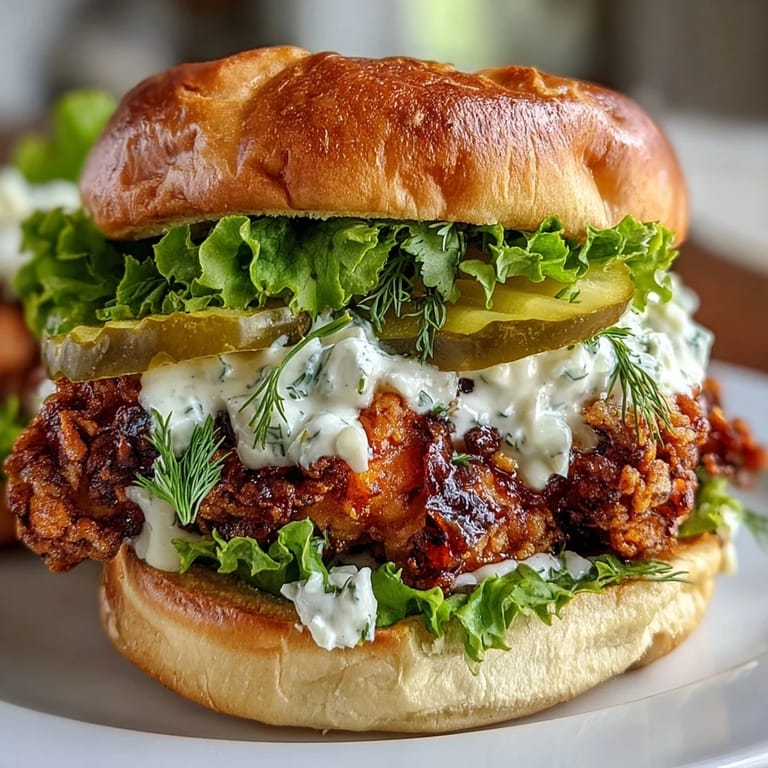 Save
Save I brought these sandwiches to a backyard hangout once, wrapped in foil and still warm from the skillet. I didn't announce them or make a fuss, just set them on the table next to the store-bought stuff. By the time I came back from grabbing napkins, they were gone, and someone's kid was licking sauce off the foil. One friend asked if I'd gotten them from a food truck. I said no, just my stove, and she looked at me like I'd told her I built the stove too. That's when I realized this recipe had crossed over from something I made for myself into something I could actually be a little proud of.
Getting the Crunch Right
The texture of the crust is everything here, and it comes down to three things: a dry dredge, hot oil, and patience. If your oil isn't hot enough, the coating will soak up grease and turn limp. If you crowd the pan, the temperature drops and you lose that immediate sizzle that seals the crust. I learned this the hard way after a batch that came out pale and floppy, tasting more like soggy cereal than fried chicken. Now I fry two pieces at a time, keep the thermometer clipped to the side of the pan, and wait for the oil to recover before adding the next round. The sound should be constant and aggressive, like static on an old radio.
Why the Sauce Matters
The sauce isn't just a condiment, it's the thing that makes you want to keep eating even after you're full. The sour cream adds body, the lemon juice keeps it bright, and the smoked paprika gives it a depth that plain mayo can't touch. I used to make it with just mayo and hot sauce, and it was fine, but fine isn't memorable. Once I started adding the paprika and a little honey, it became the kind of sauce people asked me to put in a jar. Now I make a double batch and keep it in the fridge for dipping fries, spreading on wraps, or eating with a spoon when no one's looking.
Make It Your Own
This recipe is flexible in ways that matter. If you want more heat, add extra cayenne to the dredge or a few dashes of your favorite hot sauce to the marinade. If you like it milder, dial back the spice and let the pickles and sauce do the talking. Chicken thighs work beautifully here if you prefer dark meat, they stay juicier and are harder to overcook. You can also swap the brioche for potato buns, ciabatta, or even plain white bread if that's what you have, the chicken is bold enough to carry any base.
- Try adding a slice of pepper jack cheese while the chicken is still hot so it melts slightly.
- For a tangy twist, toss shredded cabbage in a little vinegar and sugar for a quick slaw topping.
- Leftovers reheat well in a 375°F oven for about 10 minutes, much better than the microwave.
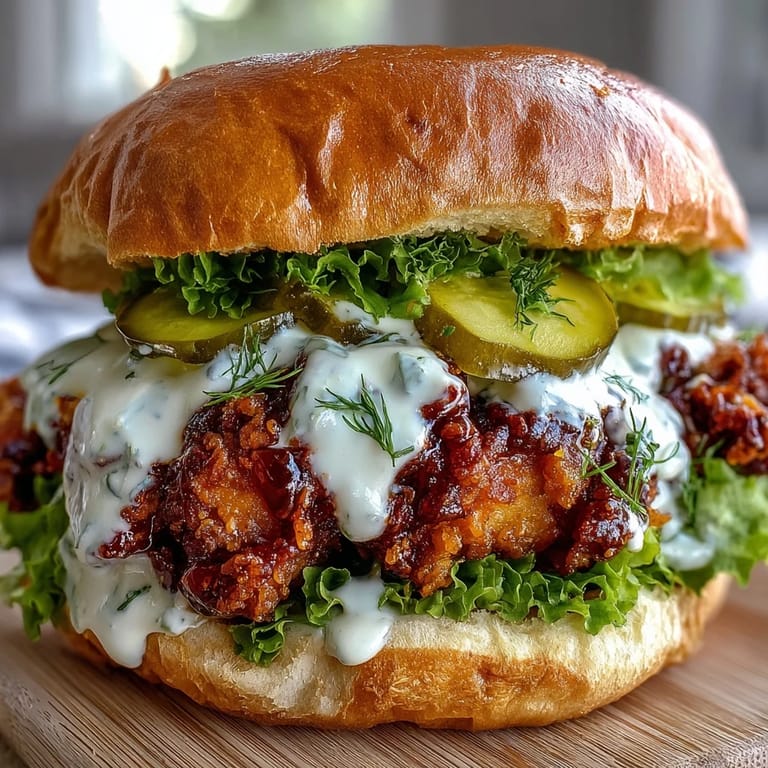 Save
Save This sandwich doesn't need much from you except a little attention and a willingness to stand by a hot stove for fifteen minutes. What you get back is something that tastes like you care, like you know what good food is supposed to feel like when you bite into it. I hope it becomes one of those recipes you make without looking, the kind you can talk through while someone else writes it down.
Recipe FAQs
- → How long should I marinate the chicken?
Marinate the chicken for at least 1 hour, but overnight in the refrigerator yields the most tender and flavorful results. The buttermilk tenderizes the meat while the hot sauce and spices infuse throughout.
- → Can I make the sauce ahead of time?
Absolutely. The creamy sauce actually benefits from resting in the refrigerator for a few hours or overnight. This allows the flavors to meld together beautifully. Store it in an airtight container and give it a good stir before serving.
- → How do I get the chicken extra crispy?
For maximum crunch, press the dredge firmly onto each piece of chicken and consider double-dredging—coating the chicken twice in the flour mixture. The combination of all-purpose flour and cornstarch creates that shatteringly crispy exterior. Also, let the excess marinade drip off before dredging to prevent clumping.
- → What temperature should the oil be for frying?
Heat your vegetable oil to 350°F (175°C). Use a kitchen thermometer for accuracy, as oil that's too cool will make the chicken greasy, while oil that's too hot will burn the exterior before the inside cooks through.
- → Can I use chicken thighs instead of breasts?
Yes, boneless skinless chicken thighs work wonderfully and add extra juiciness. Pound them to even thickness like you would breasts, and adjust frying time slightly as needed until they reach 165°F internally.
- → How do I store and reheat leftovers?
Store components separately: keep the fried chicken in the refrigerator for up to 3 days, and store the sauce in an airtight container. Reheat chicken in a 375°F oven for 10-12 minutes or until crispy and hot. Avoid microwaving as it makes the coating soggy.