 Save
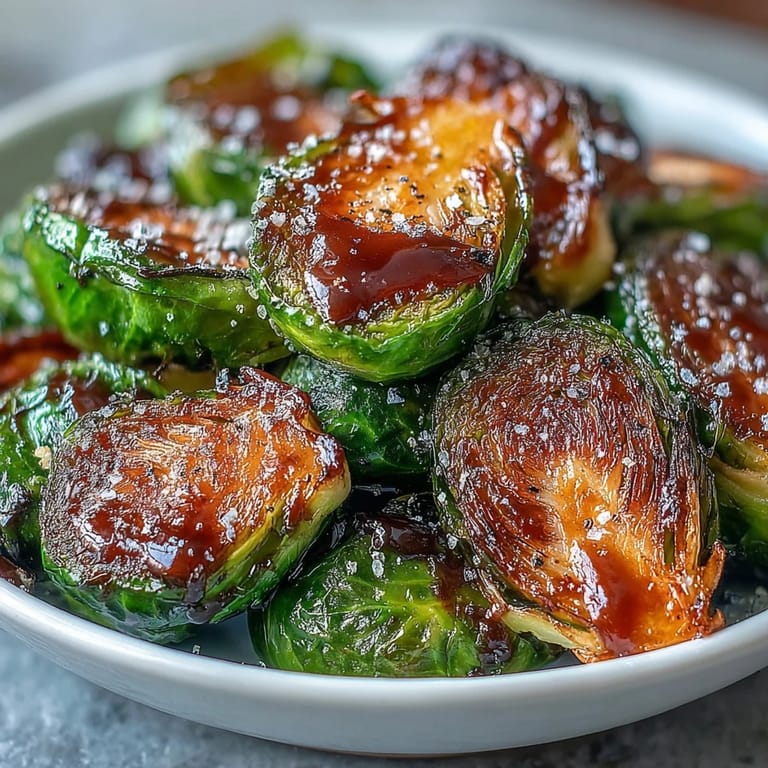
Save My neighbor once complained that Brussels sprouts were boring, so I challenged myself to prove her wrong one Sunday afternoon. I roasted a batch until they turned almost black at the edges, then drizzled them with a balsamic reduction that had been bubbling away on my stovetop. She came over for a taste and went silent for a moment before asking for the recipe, and honestly, that moment made me realize how much the right technique and the right glaze could transform something people usually push around their plates.
Last Thanksgiving, I brought this dish to my sister's house as a side, fully expecting it to sit untouched while everyone filled their plates with the traditional stuff. Instead, it disappeared first, and my brother-in-law actually asked me halfway through the meal if there was more in the kitchen. There's something about roasted Brussels sprouts that feels fancy enough for a holiday table but casual enough for a Tuesday night dinner.
Ingredients
- Brussels sprouts: Look for firm, compact heads without yellowing leaves, and don't worry about them being different sizes since smaller ones cook faster and larger ones get crispier on the outside.
- Olive oil: Use a good quality oil you actually enjoy the taste of, because it's one of only a few ingredients and it really matters here.
- Kosher salt and black pepper: Freshly ground pepper makes a noticeable difference, trust me on this one.
- Balsamic vinegar: Get the real stuff if you can, not the imitation, because when you reduce it, the quality really shines through.
- Honey: This is optional, but it smooths out the vinegar's sharpness and adds a subtle richness that feels intentional.
Tired of Takeout? 🥡
Get 10 meals you can make faster than delivery arrives. Seriously.
One email. No spam. Unsubscribe anytime.
Instructions
- Get your oven ready:
- Preheat to 425°F and line your baking sheet with parchment paper so cleanup becomes almost effortless later.
- Coat everything evenly:
- Toss the halved Brussels sprouts with olive oil, salt, and pepper in a bowl, making sure every piece gets slicked and seasoned. You want them glossy and well-dressed before they hit the heat.
- Arrange cut-side down:
- Lay them on the baking sheet in a single layer with the flat side facing the pan, which is where the magic happens, creating those browned, crusty surfaces.
- Roast with a shake:
- After about 12 minutes, shake the pan to move things around so they brown evenly, then let them go for another 8 to 13 minutes until they're caramelized and tender.
- Reduce the balsamic:
- While the sprouts roast, pour balsamic vinegar and honey into a small saucepan and simmer gently, stirring now and then, until it thickens into a glossy syrup that coats the back of a spoon. This usually takes 5 to 7 minutes and smells incredible.
- Finish and serve:
- Pile the roasted sprouts onto a platter and drizzle generously with that balsamic reduction while everything is still warm, so the glaze clings to each piece.
 Save
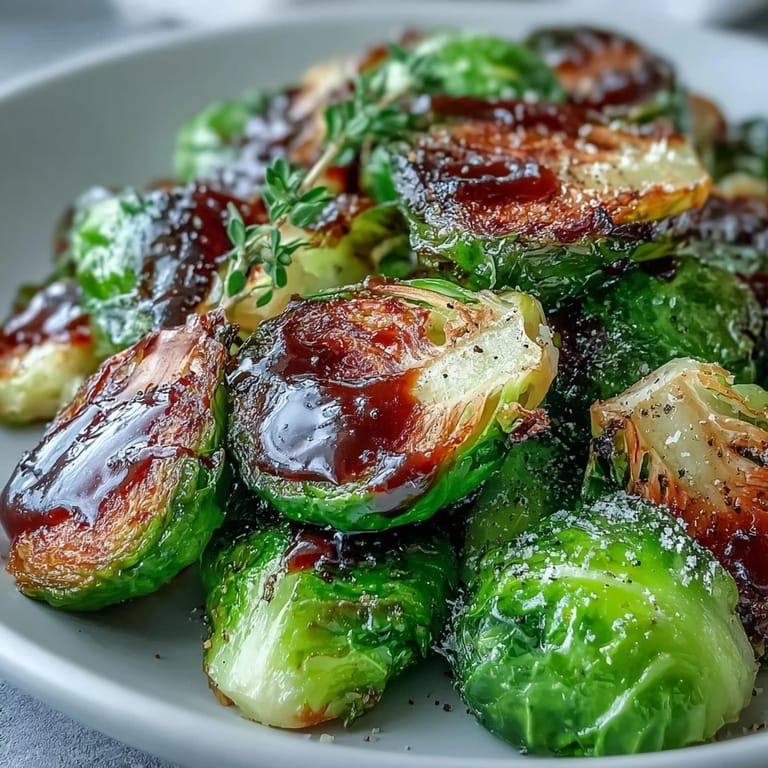
Save There's a moment halfway through roasting when your kitchen fills with this toasted, almost nutty smell, and that's when you know everything is going right. It's such a small thing, but it's become my kitchen signal that something delicious is about to happen.
The Secret to Perfect Caramelization
The real trick here is letting the cut side of the Brussels sprout make direct contact with the hot pan, which creates that golden-brown, caramelized surface that's crispy and sweet. If you try to stir them constantly or flip them early, you interrupt the browning process and end up with mushy, steamed sprouts instead. Patience pays off here in the form of texture.
Making the Balsamic Work
Reducing balsamic vinegar is simple in theory but easy to mess up if you're not paying attention, because it can go from syrupy to burned in seconds if the heat is too high. Keep the temperature at a gentle medium, stir occasionally, and you'll see it transform from thin and sharp to thick and glossy. That viscosity is everything because it's what makes the reduction cling to the sprouts instead of running off.
Flavor Variations and Add-Ons
Once you nail the basic recipe, it's fun to experiment with what you finish it with, because Brussels sprouts pair with so many flavors. I've tried adding toasted walnuts, crispy bacon bits, grated Parmesan, and even a drizzle of maple syrup for a different kind of sweetness, and each one shifts the dish in an interesting direction. The vegetables themselves are pretty neutral, which means they're a blank canvas for whatever you're craving that day.
- Toss in some crispy bacon or pancetta before serving for a smoky, savory depth.
- A handful of toasted nuts adds crunch and makes the dish feel more substantial without being heavy.
- If you go vegan, maple syrup or agave work beautifully in place of honey in the reduction.
 Save
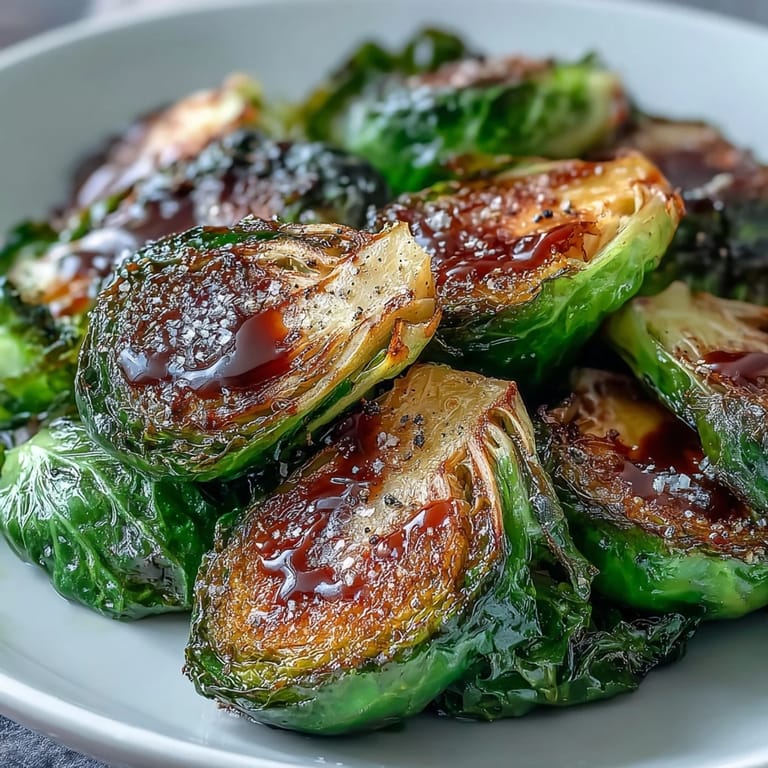
Save This dish has become my go-to when I need something that feels elegant but requires barely any real effort, and it consistently makes people rethink what they thought they knew about Brussels sprouts. Make it once and you'll understand why it keeps showing up on my table.
Recipe FAQs
- → How do I know when Brussels sprouts are done roasting?
Look for deep brown caramelization on the cut edges and darkened outer leaves. The sprouts should be tender when pierced with a fork but still hold their shape. Total roasting time typically takes 20-25 minutes at 425°F.
- → Can I make the balsamic reduction ahead of time?
Yes, the balsamic reduction can be made up to a week in advance. Store in an airtight container at room temperature. If it thickens too much, gently warm it with a teaspoon of water before using.
- → What substitutions work for the honey?
Maple syrup makes an excellent vegan alternative and adds similar sweetness. Agave nectar or brown sugar dissolved in warm vinegar also work well. Each provides slightly different flavor notes while maintaining the glaze's consistency.
- → Why do some Brussels sprouts taste bitter?
Overcooking can release sulfur compounds causing bitterness. Roasting at high heat for the correct time minimizes this. Also, choosing smaller sprouts and cutting them in half helps them cook evenly and develop sweeter flavors through caramelization.
- → Can I add other flavors to this dish?
Fresh thyme or rosemary sprigs added during roasting complement the balsamic beautifully. Crispy bacon bits, toasted walnuts, or shaved Parmesan sprinkled on top add texture and savory depth. Red pepper flakes provide gentle heat for those who enjoy spice.
- → How should I store and reheat leftovers?
Keep refrigerated in an airtight container for up to 4 days. Reheat in a 350°F oven for 10 minutes or sauté in a skillet over medium heat. The sprouts maintain their texture better when reheated in the oven rather than the microwave.