 Save
Save My neighbor showed up with a tiered cake stand one summer afternoon, asking if I knew what to do with it beyond birthday cakes. That same week, I'd bought a flawless mango at the farmer's market—the kind that smells like pure sunshine—and suddenly the answer was obvious. A tropical fruit display isn't just about feeding people; it's about creating a moment where the table becomes the main event. What started as a practical solution turned into my go-to move for every outdoor gathering since.
I made this for a last-minute brunch when a friend called saying she was bringing her new partner over. My stomach dropped—no time for anything fancy—but pulling out that tiered stand and arranging fruit felt unexpectedly elegant. Watching them both slow down mid-conversation to admire it, then grab a slice of mango, taught me that sometimes the simplest things hit hardest. It became our thing after that; every time they visit, they ask if I'm making "the fruit tower."
Ingredients
- Ripe mangoes (2): Look for fruits that give slightly when you gently squeeze them and smell fragrant at the stem end—this is when they're perfectly sweet.
- Large pineapple (1): The leaves should pull away easily from the crown, a sign the fruit is ripe and ready to shine.
- Kiwis (2): Their bright green color and slight softness make them visually striking and naturally sweet.
- Papaya (1): This tropical fruit brings a unique texture and a peachy hue that rounds out the color palette beautifully.
- Dragon fruit (1): Even if people haven't tasted it before, the pale pink skin and speckled flesh create an instant conversation starter.
- Seedless red grapes (1 cup): They add pops of jewel-like color and a refreshing burst that balances richer fruits.
- Fresh strawberries (1 cup): Choose firm berries with deep red color; they provide tartness and brightness.
- Blueberries (1 cup): These tiny gems nestle into gaps and add visual depth with their deep blue tone.
- Fresh mint leaves (1/4 cup): The fragrance matters as much as the taste here—it signals freshness the moment people lean in.
- Lime (1): Wedges serve double duty as garnish and a squeeze of brightness for those who want it.
- Vanilla Greek yogurt or coconut yogurt (1 cup, optional): This becomes your secret weapon if anyone wants to dip, adding creaminess without overshadowing the fruit.
- Honey or agave syrup (1 tablespoon): Just enough sweetness to complement the yogurt without making it cloying.
- Lime zest (from 1 lime): This tiny detail transforms plain yogurt into something that tastes intentional.
Tired of Takeout? 🥡
Get 10 meals you can make faster than delivery arrives. Seriously.
One email. No spam. Unsubscribe anytime.
Instructions
- Gather your fruits and take a breath:
- Pull everything from the fridge about 10 minutes before you start cutting—cold fruit is easier to slice cleanly and tastes crisper. Lay out your cutting board like you're setting a stage.
- Prep with intention:
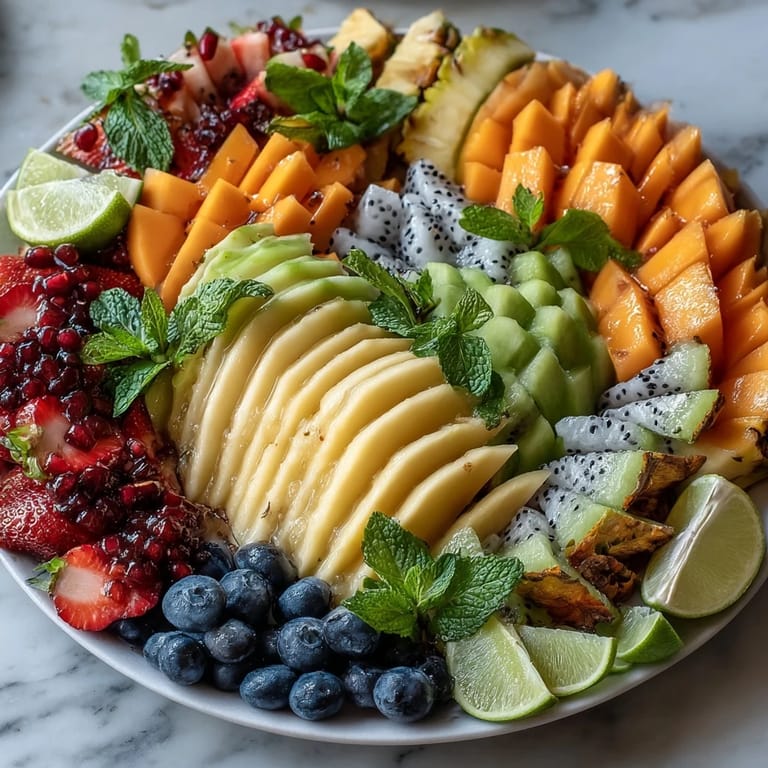
- Peel and slice each fruit with a sharp knife, taking your time because how you cut actually changes how people perceive the display. A fan of mango slices feels more thoughtful than chunks.
- Build from the center out:
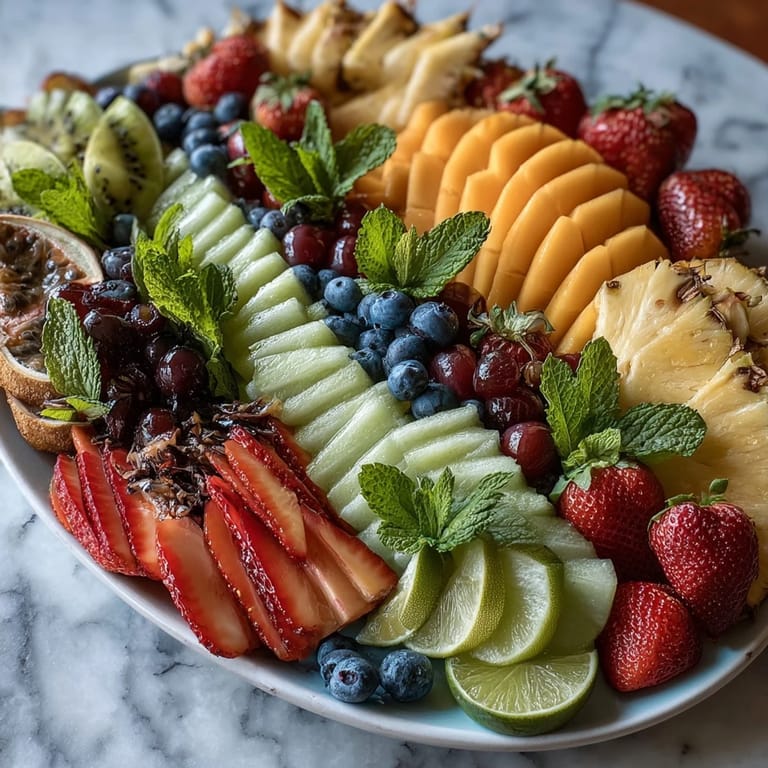
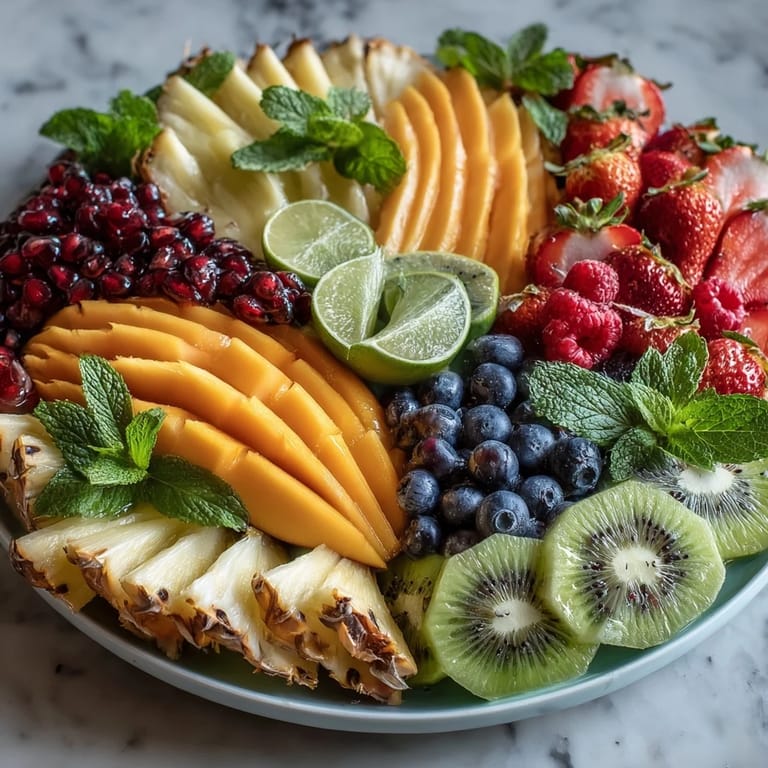
- Place your showstoppers—the mango and pineapple—at the heart of your platter or tiered stand. This gives you an anchor point so the arrangement doesn't feel random.
- Layer with rhythm:
- Arrange the remaining fruits around the center, alternating colors so your eye travels smoothly across the display. Think of it like painting—you want warm tones next to cool ones, light next to dark.
- Finish with flourish:
- Scatter mint leaves across the top and tuck lime wedges wherever they look natural. The aroma of mint released when someone picks up a piece is part of the magic.
- Make the optional dipping sauce:
- Stir yogurt, honey, and lime zest together in a small bowl until smooth, then place it alongside or at the base of your display. It should feel like an invitation, not an obligation.
- Keep everything cold:
- Return the display to the fridge until guests arrive, so every bite has that refreshing snap.
 Save
Save There's a moment that happens almost every time I set one of these out, usually about five minutes in: someone who swore they don't eat much fruit reaches for a slice of dragon fruit, takes a bite, and their whole face changes. That's when I know the display did its job, not just as food but as an experience.
The Art of Color and Arrangement
The most important thing I've learned about fruit displays is that your eyes eat first. I used to just pile fruits together and wonder why it didn't feel special, but once I started thinking about contrast—placing deep purple grapes next to pale green kiwi, or bright red strawberries next to blueberries—everything changed. The display became something people wanted to photograph, which meant it was something people wanted to experience.
Choosing Fruits That Actually Work Together
Not all tropical fruits are created equal when it comes to displaying them. Some fruits bruise easily, others oxidize and turn brown, and some are so soft they collapse under their own weight. I learned early on that pairing sturdy fruits like pineapple and mango with delicate ones like berries means the delicate ones get eaten first, which actually works in your favor. The display evolves as people eat, which somehow makes it feel more natural than if everything just sat there untouched.
Making It Your Own
The beauty of a fruit display is that it bends to whatever you have on hand and whatever season you're in. I've made winter versions with pomegranate seeds and persimmons, spring versions with fresh figs and strawberries, and autumn versions with sliced apples and grapes. The framework stays the same—arrange with intention, choose contrasting colors, and finish with fresh herbs—but the fruits change based on what looks good at the market that day. This flexibility is what keeps it from feeling tired even after making it dozens of times.
- Edible flowers like pansies or nasturtiums add unexpected elegance if you can find them.
- A light dusting of toasted coconut flakes brings texture and a subtle tropical note without overwhelming the fruit.
- Keep a spray bottle of water nearby to mist the display right before guests arrive—it makes everything glisten.
 Save
Save This display has become my answer to the question everyone asks: what can I bring that won't take all day? It turns out that something beautiful and effortless can still feel like a gift.
Recipe FAQs
- → How should the fruits be prepared for the display?
Peel and slice the mangoes, pineapple, kiwis, papaya, dragon fruit, and other fruits evenly. Arrange them artfully to showcase a variety of colors and shapes for maximum visual appeal.
- → What garnishes complement the tropical fruit display?
Fresh mint leaves and lime wedges add brightness and aroma, enhancing the presentation and refreshing flavor.
- → Can I substitute any fruits in the arrangement?
Yes, seasonal fruits like passion fruit, star fruit, or melon can be swapped in to maintain freshness and variety.
- → Is there a suggested dipping accompaniment?
An optional dip combines vanilla or coconut yogurt with honey or agave syrup and lime zest, adding a creamy and tangy contrast.
- → How far in advance can the fruit display be prepared?
Prepare and arrange the fruits up to a few hours ahead; keep chilled to maintain freshness and prevent browning.
- → What tools are recommended for assembling the display?
A sharp chef’s knife, paring knife, cutting board, large platter or tiered stand, small bowl for dip, and serving tongs are ideal.