 Save
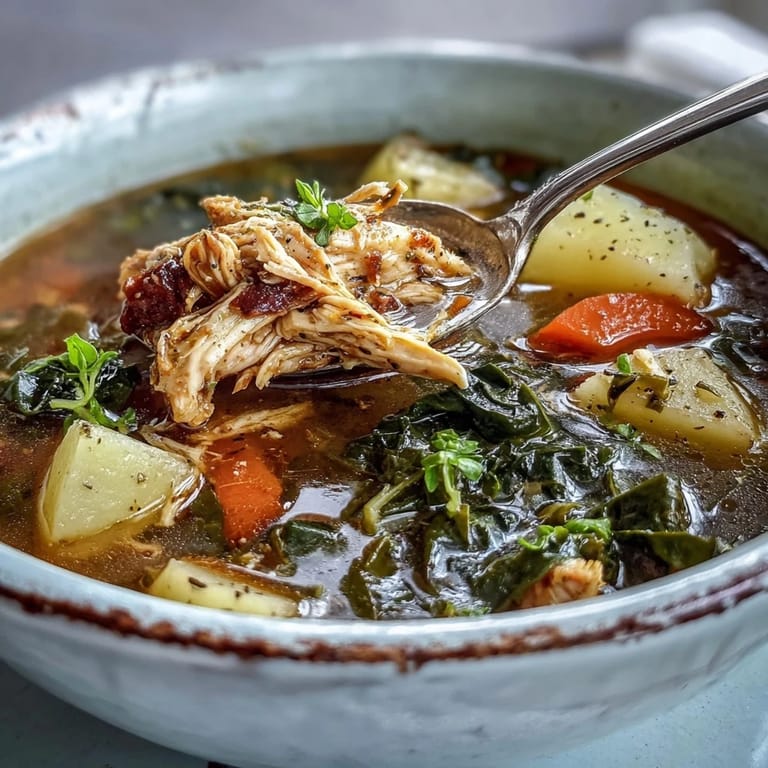
Save My neighbor knocked on my door one chilly afternoon with a bag of fresh collard greens from her garden, and something about their deep green color made me want to do them justice in a proper, warming soup. I'd grown up eating versions of this dish at family tables, but this time I wanted to build it from scratch with care, layering flavors so each spoonful felt like a small comfort. What started as a simple request turned into the kind of soup that fills your kitchen with the most inviting aroma, the sort that makes people ask what you're cooking before they even sit down.
I made this for my coworker Marcus when his family was managing a lot, and watching him taste it, close his eyes, and just nod told me everything. He came back the next week asking if I'd written down the recipe because his kids wanted it again. That's when I realized this soup had crossed over from just being dinner into being something people remember.
Ingredients
- Boneless, skinless chicken breasts or thighs (2 breasts or 3 thighs, about 400 g total): Thighs stay juicier and more forgiving if you accidentally simmer a bit longer, but either works beautifully here.
- Yellow onion (1 large, diced): This is your flavor foundation, so don't rush the sautéing, let it turn translucent and soft.
- Carrots (2, peeled and sliced): They sweeten the broth naturally and give you something to bite into that feels substantial.
- Celery stalks (2, sliced): The quiet hero that ties everything together, adding subtle depth you can't quite name.
- Potatoes (2 medium, peeled and diced): Keep them in smaller pieces so they soften at the same pace as the greens.
- Collard greens (4 cups, stems removed and leaves chopped): The star of the show, rich in iron and nutrients, becoming silky and tender as they cook.
- Garlic cloves (3, minced): Add this after the softer vegetables so it doesn't brown and turn bitter.
- Low-sodium chicken broth (8 cups): This is your canvas, so taste your broth before using it, choose one you'd actually drink on its own.
- Bay leaf (1): A small but mighty addition that seasons the entire pot without being noticeable.
- Dried thyme and oregano (1 teaspoon each): These herbs are the backbone of the seasoning profile, warming and herbaceous.
- Salt and freshly ground black pepper: Always taste at the end and adjust, since broths vary in saltiness.
- Olive oil (2 tablespoons): Use something you enjoy the taste of, it matters in a simple dish like this.
Tired of Takeout? 🥡
Get 10 meals you can make faster than delivery arrives. Seriously.
One email. No spam. Unsubscribe anytime.
Instructions
- Build your aromatic base:
- Heat the olive oil in a large soup pot over medium heat and add the diced onion, carrots, and celery together. Let them soften for 5 to 6 minutes, stirring occasionally, until the onion becomes translucent and the kitchen fills with that classic vegetable-cooking smell.
- Welcome the garlic:
- Stir in your minced garlic and cook for just 1 minute, until fragrant but not browned. This quick step coaxes out all the garlic's sweetness without any of its harshness.
- Add your proteins and liquids:
- Place the chicken breasts or thighs into the pot, followed by the diced potatoes, chicken broth, bay leaf, thyme, oregano, and a pinch each of salt and pepper. Bring everything to a boil, then lower the heat and let it simmer uncovered.
- Cook the chicken through:
- After about 20 minutes of simmering, the chicken will be cooked through and tender. You'll know it's ready when it shreds easily with two forks and there's no pink inside.
- Shred and return:
- Remove the cooked chicken to a cutting board and shred it into bite-sized pieces using two forks, pulling the meat apart with a gentle, steady motion. Return the shredded chicken to the waiting pot.
- Bring in the greens:
- Add all the chopped collard greens to the pot and let everything simmer for another 10 to 15 minutes, until the greens are tender and have released their goodness into the broth. The soup will look fuller and richer as the greens soften and darken.
- Finish with intention:
- Fish out the bay leaf and taste the soup carefully. Adjust the salt, pepper, or any herbs as needed, remembering that seasoning is personal and should be done to your liking.
- Serve and savor:
- Ladle the soup into bowls while it's hot and consider a light garnish of fresh herbs if you have them on hand.
 Save
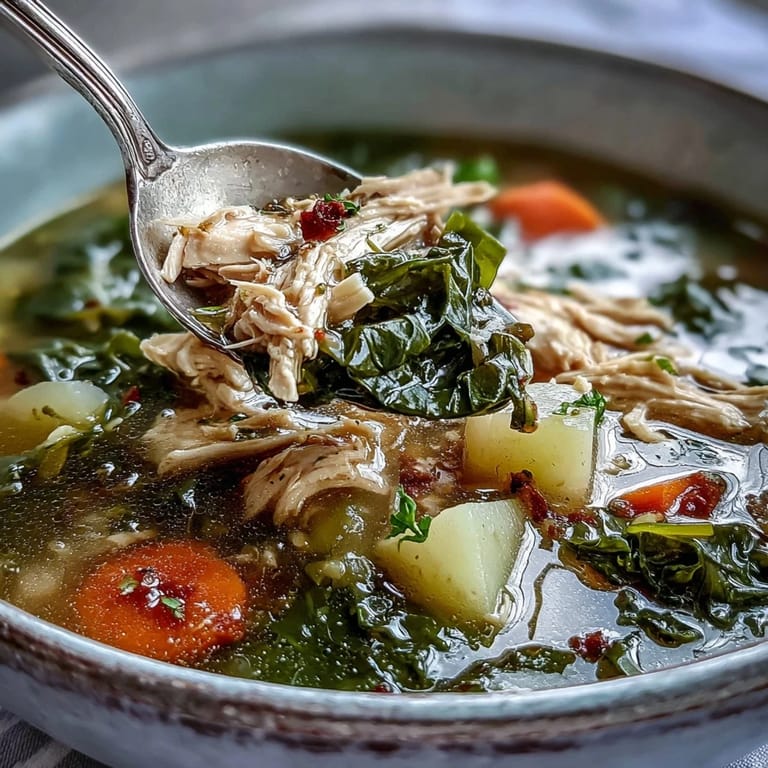
Save There's a moment when I'm standing at the stove, steam rising up, and the whole apartment smells like home cooking, where I remember why I love feeding people. This soup has a way of doing that, of reminding you that good food doesn't need to be complicated to be meaningful.
How to Choose Your Greens
Collard greens are sturdy and forgiving, holding up beautifully to long cooking without falling apart, but if you can't find them or want to switch things up, kale and Swiss chard are both wonderful substitutes. Kale will remain a bit more textured, while Swiss chard breaks down similarly to collards, so choose based on your texture preference. I've also added spinach near the very end for brightness, though it wilts down to almost nothing so you'd want to double the amount.
Making It Heartier
Sometimes a soup wants more substance, more layers of flavor and texture that make it feel like a complete meal in itself. I've stirred in cooked white beans or corn before serving, and both transform the soup into something almost stew-like, more filling and satisfying. You could also add a splash of lemon juice or a pinch of chili flakes at the end if you want brightness or a little heat creeping through.
- For extra depth, add a splash of fresh lemon juice just before serving, it lifts all the other flavors.
- A pinch of red chili flakes adds warmth and complexity without making the soup spicy.
- Cooked white beans or corn stirred in at the end make the soup heartier and turn it into more of a complete meal.
Storage and Make-Ahead Tips
This soup keeps beautifully in the refrigerator for up to 4 days, and I often find it tastes even better the next day as the flavors have had time to get to know each other. You can also freeze it for up to 3 months, though I recommend leaving out the potatoes if you plan to freeze, as they can become mealy after thawing. When reheating, gentle warmth on the stovetop is kinder to the greens than the microwave, and you can always add a splash of broth if it's thickened up.
 Save
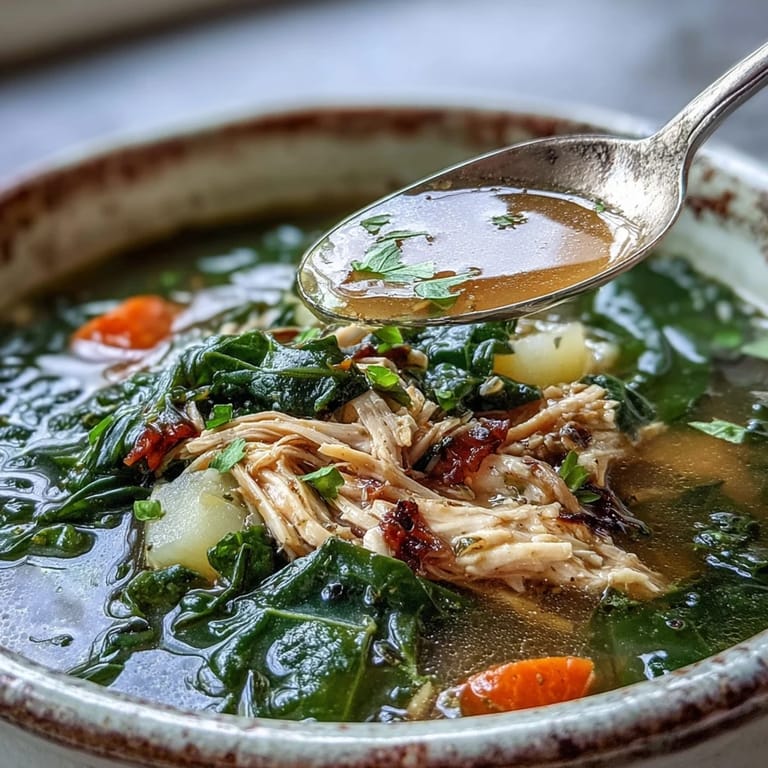
Save This soup asks for almost nothing from you except a little attention and a willingness to let good ingredients speak for themselves. Make it for someone you care about, or make it for yourself on an evening when you need something warm and real.
Recipe FAQs
- → Can I use chicken thighs instead of breasts?
Yes, chicken thighs work wonderfully and add extra richness to the broth. Use 3 boneless, skinless thighs as suggested in the ingredients list.
- → What can I substitute for collard greens?
Kale or Swiss chard make excellent substitutes. They have similar cooking times and nutritional profiles, though the flavor will be slightly different.
- → How do I store leftover soup?
Store in an airtight container in the refrigerator for up to 4 days. The flavors actually deepen over time. Reheat gently on the stovetop or in the microwave.
- → Can I make this soup in a slow cooker?
Absolutely. Combine all ingredients except collard greens in the slow cooker. Cook on low for 6-7 hours, shred the chicken, add greens, and cook for another 30 minutes.
- → How can I make this soup heartier?
Add cooked white beans, corn, or extra potatoes. You can also serve it over rice or with crusty bread for a more filling meal.
- → Do I need to remove collard green stems?
Yes, the stems are tough and fibrous. Strip the leaves from the center rib before chopping for the best texture in your soup.