 Save
Save There's a particular afternoon I can't quite forget—standing in my kitchen with tomatoes still warm from the farmers market, their skin practically glowing. My neighbor had just dropped by with a bunch of basil from her garden, and I realized I had everything I needed for something simple but perfect. That's when Caprese stopped being just a salad I'd eaten at restaurants and became something I could actually make, something that tasted like summer distilled into a few good ingredients.
I made this for a small dinner party once, and someone asked for the recipe before they'd even finished their plate. What got me was how they described it: not as salad, but as the taste of simplicity. That stuck with me—Caprese isn't complicated, but it demands respect for its ingredients and the space between them.
Ingredients
- Ripe tomatoes (3 large, sliced): These are the star, so choose ones that smell like tomato and yield slightly to pressure. If they're mealy or pale, the whole thing suffers, so don't skip this step.
- Fresh mozzarella (8 oz, sliced): The creamy, delicate kind that falls apart if you so much as breathe on it wrong. Room temperature makes all the difference.
- Fresh basil leaves (1/4 cup): Tear them by hand rather than cutting; it releases oils and prevents bruising that turns the leaves dark.
- Extra-virgin olive oil (2 tbsp): This isn't the time to use everyday oil. Quality matters because you're tasting it directly.
- Balsamic glaze (1–2 tbsp): The reduced, syrupy version—not straight vinegar. It adds sweetness and richness.
- Sea salt and freshly ground black pepper: These wake everything up. Don't skip either one or underestimate how much you need.
Tired of Takeout? 🥡
Get 10 meals you can make faster than delivery arrives. Seriously.
One email. No spam. Unsubscribe anytime.
Instructions
- Arrange your layers:
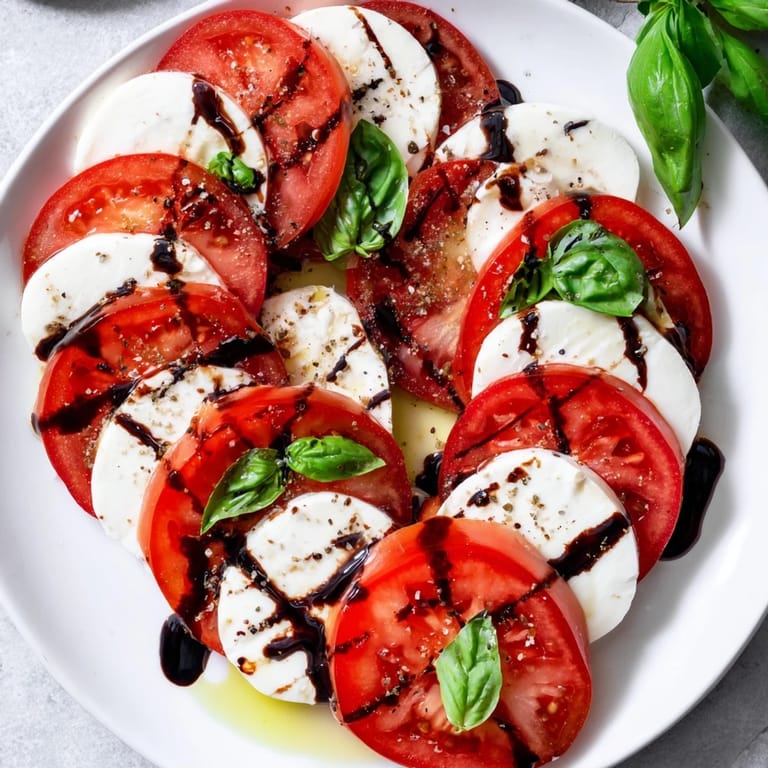
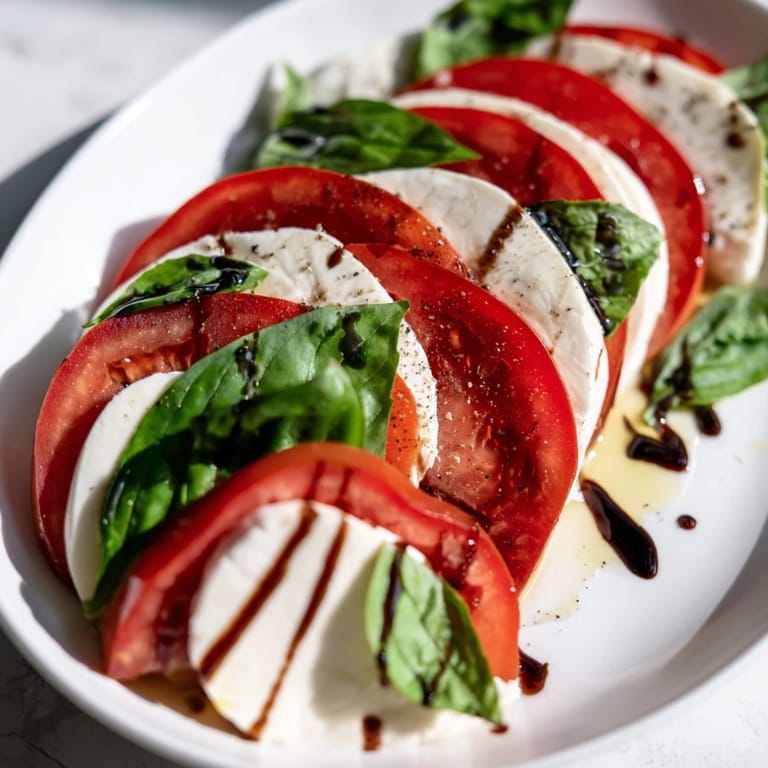
- On a large platter, alternate tomato and mozzarella slices in a pattern that feels natural to you, letting them overlap just slightly. Think of it like building something that looks intentional, not haphazard.
- Tuck in the basil:
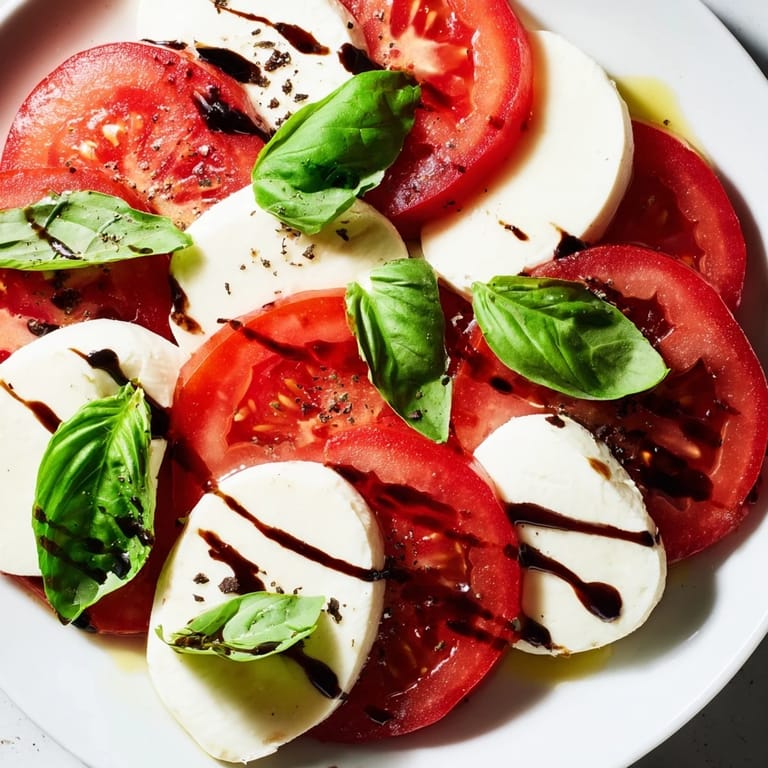
- Slip fresh basil leaves between the tomato and mozzarella pieces—this distributes the flavor and makes the whole thing look like you meant for it to be this pretty.
- Finish with oil and glaze:
- Drizzle olive oil first in a light, even stream, then follow with balsamic glaze. Don't drown it; you want each component to shine.
- Season to taste:
- Sprinkle sea salt and black pepper over everything. Taste a bite if you can—this is your last chance to balance flavors before serving.
- Serve right away:
- Don't let it sit too long or the tomatoes release too much liquid and the mozzarella gets cold and stiff. Immediate is best.
 Save
Save I once made this for someone who said they didn't really like salads, and they went back for seconds. That's when I understood that Caprese isn't trying to convince you to eat vegetables—it's just tomato, cheese, and basil doing what they do best together, without apologies or elaborate tricks.
Choosing Your Tomatoes
The difference between a good Caprese and a forgettable one lives entirely in the tomato choice. Heirloom varieties give you color variation and complexity, while a perfectly ripe beefsteak or Roma tomato offers reliability and structure. In season means summer, when tomatoes taste like tomatoes. Out of season, you're fighting uphill. Trust your nose and the weight in your hand.
About the Mozzarella
Fresh mozzarella (the kind that comes in water, not aged blocks) is essential here. It should be mild, creamy, and almost delicate. Pasteurized is fine, but look for the ones sold in the refrigerated section, ideally imported or made locally. Avoid low-moisture mozzarella—it's meant for cooking, not for this.
Variations & Serving Ideas
You can layer this a dozen different ways depending on mood or what you have. Some people add a handful of peppery arugula underneath, others finish with a pinch of red pepper flakes. It pairs beautifully with crusty bread for soaking up oil, and a crisp white wine like Pinot Grigio or Vermentino turns dinner into something special.
- Try heirloom tomatoes in late summer for color variation and surprising flavor notes.
- A whisper of garlic rubbed on the platter adds depth without overwhelming.
- Serve it at room temperature, never straight from the fridge, or you'll lose the delicate creaminess.
 Save
Save This is the salad that taught me that sometimes less is more, and that respecting your ingredients beats trying to reinvent them. Make it once and you'll see why it never goes out of style.
Recipe FAQs
- → What type of tomatoes work best?
Ripe, in-season tomatoes are best for a sweet and juicy flavor. Heirloom tomatoes can add color and depth.
- → Can I use a different cheese?
Fresh mozzarella is preferred for creaminess, but burrata or other mild cheeses can be considered.
- → How should the balsamic glaze be applied?
Drizzle it evenly over the assembled layers to add a sweet and tangy finish without overpowering the fresh ingredients.
- → Are any herbs besides basil recommended?
Basil is traditional, but adding a handful of arugula provides a peppery twist enhancing flavor complexity.
- → What seasoning is ideal?
A sprinkling of sea salt and freshly ground black pepper enhances the natural flavors without masking freshness.